Issues
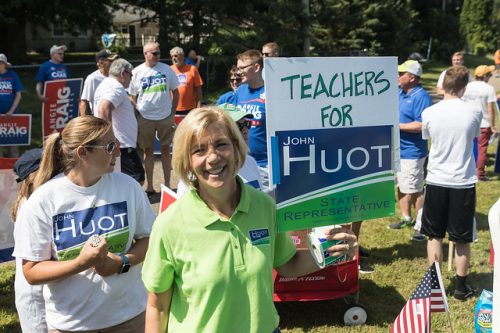
Education
As a parent of three students who graduated from District 196 schools, I know that they received a comprehensive education and were well prepared for their chosen paths. As a real estate professional, I know that excellent schools keep our property values high, encourage local businesses, and promote safe neighborhoods. School District 196 has caring, experienced and highly trained teachers who are committed to a safe, welcoming, and productive learning environment. As your Representative, I have supported legislation that ensures our public schools continue to be the best in the nation.
As your State Representative, I will:
Continue to support full and equitable funding for our public schools.
Ensure funding that will allow schools to have small class sizes, well-trained teachers, and support staff, as well as a safe environment in which to learn.
Provide funding for early learning and full-service schools to shrink Minnesota’s opportunity gaps.
Listen to and support educators and parents to determine what is best for all our kids.
Ensure that students receive a comprehensive education. Instead of denying the past, or hiding from uncomfortable realities, education helps us chart a better future for all.
Oppose vouchers and school privatization, which diverts funding from our public schools to institutions that are not accredited and have little oversight.
Fight for highly trained educators through strong licensing standards. Retaining current teachers and successfully recruiting future teachers into the profession requires high standards and higher salaries and benefits, not less preparation and training.
Promote programs that help make our schools safe and free from fear. Increasing the ratio of counselors to students, keeping class sizes small, anti-bullying campaigns, and other mental health programs will help make our schools safer. Arming teachers is not a reasonable solution.
Support a public two-year associate program for students willing to work hard. The state should also support any student who wishes to obtain a trade degree at a public vocational school.
Advocate for programs that will lead to forgiveness of a percentage of the current outstanding educational loan debt.
Highlights: Appropriated over $300 million in early learning scholarships. Appropriated $44 million in state grants to make college affordable for more families. Invested more than $6 billion over four years in our public schools, and protected the link between future funding and inflation, stabilized base budgets, and brought down the Special Education cross-subsidy so districts can direct more of their budget to the needs of all their students. Created a teacher apprenticeship program (2025 1st Special Session Laws, Ch. 6). Stabilized school staffing through unemployment insurance coverage for hourly employees, helping to keep dedicated individuals in crucial support positions. Reduced hunger as a barrier to learning by providing free school meals to all students – and maximized federal funding. Hungry children often need more services and fall behind.
My legislation in 2023 secured $92 million for the University of Minnesota-Twin Cities undergraduate chemistry teaching lab, which opened in 2025.
Made good on the North Star Promise by making state college tuition-free to grads whose families earn $80,000 or less.
Improved children’s safety by requiring cars stop whenever school buses’ red lights are flashing.
Enhanced school safety with “Knoxboxes” to give emergency building access to public safety officers.
Celebrated the opening of Emerald Trail Elementary School in 2025! Minnesota students deserve access to the best educators, facilities, and programs. Excited to continue partnering with our local education leaders to get the best outcome for our kids.
Affordable Comprehensive Healthcare for All
Comprehensive, affordable healthcare is critical to the well-being of Minnesota families. The latest data from the Minnesota Department of Health shows an alarming increase in uninsured people, including 62,000 children. For those still insured, rising premiums and medical costs are stressing family budgets up to, if not beyond, the breaking point. Cuts to premium support falls particularly hard on farmers, small business owners and older adults. This is not sustainable and we need to explore new and better options for accessing healthcare in Minnesota, including a buy-in option for MinnesotaCare or a new public option to drive down costs for hard working families across the state. Hospitals and providers are similarly approaching a breaking-point and we face the imminent closure of a major regional trauma center. During almost three decades of working in emergency medical services, I saw countless people in medical crises. I have seen families worried about their loved ones, while also struggling with the possibility that they won’t be able to pay for their needed care. Minnesota families deserve peace of mind when faced with medical diagnoses and decisions – they should not have to risk personal bankruptcy for chemotherapy. Federal changes to community safety-net programs are bringing new costs to our counties. In addition to administering much of our health and human services programs, Minnesota counties will now be responsible for the technological and financial burden of repeatedly determining eligibility, as well as directly providing new services, like food assistance. We in the legislature must work with the counties to ensure that these added responsibilities do not lead to massive property tax hikes and that they have the technological updates needed to effectively carry out these new responsibilities. As the Representative for HD56B, I support legislation that provides for effective and efficient medical care for all Minnesotans. I will continue to work toward the adoption of a healthcare system that does not tie access to healthcare to employment, allowing Minnesotans to stay rooted in their communities rather than needing to relocate for the sake of health coverage. I will also focus on ensuring that small business employers are not financially stressed by providing quality healthcare options to their employees. I have sought input from medical professionals and constituents – not just insurance companies – to inform my healthcare votes.
Women’s Reproductive Health:

I support reproductive freedom. Private medical decisions should remain private, not controlled by legislators. I voted to protect women’s rights to make reproductive choices for themselves and their families. This fundamental freedom is essential to the economic and emotional health of all Minnesotans. I support easy and affordable access to the full range of reproductive healthcare and family planning resources. We all know that emergencies can arise at any point in a pregnancy, and that urgent decisions must be made between patients and doctors. It is crucial that women and families in Minnesota remain free to make the best decisions for themselves and their healthcare needs without interference from legislators.
Highlights: As Co-Chair of the Legislative Task Force on Emergency Medical Services, we began to address the urgent crisis facing ambulance services, particularly in greater Minnesota. Municipalities are struggling to respond to emergency calls; delays are life threatening. My Bill, signed into Law, allocates $30 million to stabilize emergency ambulance services and created a new office dedicated to EMS oversight. Passed with strong bi-partisan support. The Sprint EMS program launched in January 2026, getting emergency care to people faster, particularly in rural areas. This is one of the innovations that emerged from the Legislative Task Force on Emergency Medical Services and utilized some of the one-time surplus money to get started. Allocated $35 million in 2025 to modernize the Child Welfare and Social Security IT systems in 2025. Addressed rising hunger by allocating $12 million for food security, including: $5 million for food shelves; $5 million for food banks; $1 million for prepared meals, and $1 million for the American Indian Sovereignty program in 2025. Capped co-pays for inhalers, Epi-Pens, and chronic medical supplies. No co-pays on additional screening for mammograms. $437,838 investment in Apple Valley Village Health Care Center in 2024.
Reformed laws concerning medical debt: debt no longer reported to credit bureaus; more transparent collections policies; debt no longer automatically transferred to spouses; future medical care cannot be denied due to debt; new processes to dispute medical billing.
Provided wage increases for thousands of healthcare workers and improved the working conditions for nursing home staff.
Building a Thriving Economy
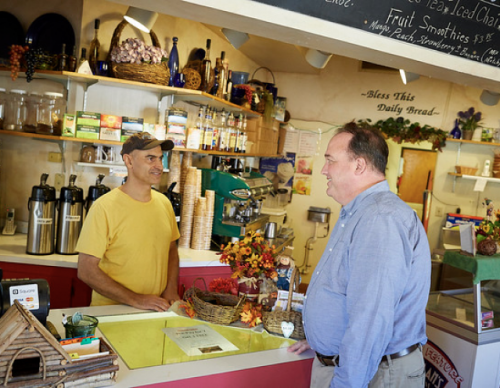
The cost of living is too high. Minnesotans’ budgets are stretched to the limit trying to pay for groceries, childcare, health care, housing, gas and utilities, and families are making hard choices. More people are going without health insurance and hoping their luck holds out. Food pantries are struggling to meet increased demand. Consumer debt is rising just to cover basic needs. Current federal policies are making the problem worse by cutting food aid, raising the cost of groceries, driving up healthcare costs, and spiking gas and energy prices. The reality is we now have an economy that works for those at the top, while the rest of us struggle.
I value an economy that works for everyone.  As your Representative, I have focused my energies toward creating job opportunities throughout Minnesota.  We must support independent business owners, farmers and labor, and ensure equal pay and opportunities for all Minnesotans.

Most importantly, I value workers.  As a former union member and labor leader, I know that collective bargaining agreements improve wages, benefits, and working conditions for all Minnesotans.  The types of jobs Minnesotans will have in the future may require that workers possess new skills.  I will continue to champion legislation that assists workers in acquiring the expertise needed to be successful in our challenging economy.

I am proud of my votes in the Minnesota Legislature aimed at improving the lives of working families by increasing access to affordable childcare and expansive pre-K opportunities, providing free meals for public school students, building a smart and accessible public transportation network, supporting excellent education opportunities, protecting unions and collective bargaining, and requiring higher wages for the lowest paid workers.  At present my Bill to provide property tax relief is working its way through the legislative process, and I have backed other Bills to help seniors and lower income families.
The legislature must do more to help Minnesotans afford their lives. We need:
Affordable Health Care: Allow a buy-in to the MinnesotaCare or create a public option; rein in insurance companies and Big Pharma; improve access to mental health services, particularly for young people; require insurers to cover necessary treatments and medications.
Affordable Childcare: Low or no cost universal childcare from birth to age five; expand public pre-K for three- to four-year-olds; More Head Start and community-based openings for infants, toddlers and pre-schoolers; better wages for childcare workers; new quality standards for all childcare centers.
Affordable Housing: Spur more starter-home building through public investment and policy reforms; limit or ban corporate ownership of single-family homes; Ban algorithmic price fixing schemes that illegally increase rents; reduce property tax pressures on local governments and residents.
Affordable Energy: Insulating and weatherizing homes; promoting energy efficiency in homes and businesses; supporting families facing utility shutoffs; stop utilities from charging Minnesotans for lobbying and high executive salaries; requiring large energy users, like data centers, to shoulder the increased costs rather than shifting the burden to local families.
Affordable Groceries: Prohibit surge pricing, gouging, and using our personal information to set individual prices.
We must also be good stewards of our tax dollars, and there must be accountability when someone steals from us. Many of those who committed fraud are now in prison and prosecutions of others continue. It is better to prevent fraud in the first place as well as strengthening oversight. There are several plans being debated in the legislature, and it will take a combination of ideas to provide meaningful results. A new Inspector General office can monitor providers and respond when misconduct is detected. However, current policies provide services through fee-based businesses, which has fostered opportunities for fraud. Shifting some services to state-agency controlled programs would allow direct oversight and be better positioned to avoid these types of fraud. In short, the state should stop outsourcing the state’s safety net to the for-profit private sector. It is despicable that funds meant to provide food, housing, healthcare and services for vulnerable members of our community were stolen. These victims are the people who cannot be forgotten in these debates. Cutting services to those in need is not a viable response.
Highlights
2025 Legislative Session:
-
Invested $4 million to protect business against the avian flu.
-
Capital Investment of $13.7 million in the Minnesota Zoo.
-
Maintained $129.9 million in funding for Great Start which supports the childcare and early education workforce.
-
Created a teacher apprenticeship program.
-
Stabilized our schools’ workforce by ensuring unemployment insurance for hourly employees.
-
Protected Iron Range miners by providing unemployment insurance coverage.
-
Provided $12 million toward food stabilizing food security.
-
Invested $44 million in state grants to make collage affordable for more families.
-
Negotiated a new SEIU contract which raised wages for thousands of healthcare workers.
-
Increased wages and holiday pay for nursing home workers, while providing $5.6 million to nursing homes to help cover these increased expenses.
-
Increased funding for direct grants and workforce development grants.
-
Increased funding for employment supports for Minnesotans with disabilities.
-
Repealed Data Center energy sales tax exemption.
-
Invested in large-scale infrastructure projects by passing the bonding bill. Instead of spending millions in maintenance, we can begin long over-due replacement and improvement projects.
-
Delivered the largest tax cuts in Minnesota history while investing in Minnesotans, beginning with $100 million for businesses affected by the covid pandemic, then passing the 2023 Tax Bill which provided: one-time tax rebates; expanded Child Tax Credit – reducing child poverty by 33%; expanded the Social Security and Public Pensions tax cut; expanded the K-12 Education Credit; provided one-time and permanent property tax cuts; increased Local Government Aid and $300 million in Public Safety Aid across Minnesota; and tax credits for beginning farmers and new small businesses.
*Invested in business and protected workers by (a) allocating $1 billion in new spending and unlocking $500 million in matching federal dollars for business development, workforce development, grants and loans to small businesses; (b) improving worker protections through paid family and medical leave, earned sick and safe time, protections for warehouse and oil refinery workers, protections for pregnant and nursing workers, public employee access to unions, and improved nursing home workforce standards.
-
Returned $145 million of tax-payer dollars to Dakota County: $96 million for Highway 13 $31 million for County Services $6 million for Crisis and Recovery Center $5 million for Veterans Memorial Greenway $5 million for Minnesota Greenway $2 million for Thompson County Park
-
$26 million increase for Dakota County in Local County Aid
-
$2.4 million to improve the interchange at Highway 52/County Road 42
-
$2.2 million for Highway 3 roundabout at the Rosemount High School entrance
-
$18 million for the Minnesota Zoo, including funding for the Tree Top Trail
-
$24 million for construction improvements to the Rosemount Readiness Center
-
$92 million for the University of Minnesota – Twin Cities campus chemistry teaching lab
-
Bolstered pensions for current and former state employees and improved pensions for St. Paul teachers.
-
Secure Choice Retirement Act requires businesses with five or more employees to participate and set up access to retirement accounts for workers making a dignified retirement possible.
In the legislature, I will continue to seek ways to strengthen our economic policies so that all Minnesotans may strive to thrive.
Safeguarding Minnesotans' Money
I stand with my DFL colleagues to reaffirm our commitment to preventing and fighting fraud in Minnesota. Every public dollar should serve the public good, not enrich scammers, shell companies, or criminals who exploit vulnerable communities. It is infuriating to see taxpayer dollars – intended to support families, seniors, individuals with disabilities, and children – being stolen through fraudulent activities. Many of the criminals are now in jail, stolen money has been clawed back, and prosecutions continue. My colleagues and I have rolled out a comprehensive legislative package aimed at preventing, detecting, investigating, and holding accountable those who commit fraud in Minnesota’s public programs. I am working with my colleagues on the other side of the aisle to pass meaningful and effective legislation to protect all Minnesotans. Our goals are clear: to stop fraud before it starts and to ensure that those who perpetrate these crimes are held fully accountable. We must protect the essential programs that serve our most vulnerable citizens, safeguarding their access to vital resources. Legislative fixes must address systemic failures and prevent fraud as well as strengthen agencies’ ability to halt fraud when it is discovered. This will require a comprehensive approach to ensure that we not only prevent fraud but also effectively identify and prosecute fraudsters. The integrity of our public programs depends on it, and we cannot allow opportunists to undermine our collective efforts. Now is the time for decisive action. Solutions will need to be multi-pronged and carefully crafted. There are several efforts currently being debated in the legislature, including: funding critical technology upgrades, increased staff in the Attorney General’s office, automatic audits, significant changes to the Department of Human Services, and/or instituting an Inspector General. In some cases, bringing the work back under direct state control rather than outsourcing the safety-net to for-profit businesses who operate on a fee-for-service basis may be needed.
Administrative Oversight:
My own work in the Legislature and as Co-Chair of the Legislative Task Force on Emergency Medical Services led to the elimination of the Emergency Medical Services Regulatory Board after a report by the Office of Legislative Auditor that the Board improperly approved monetary grants, did not provide oversight for grants, overpaid ambulance services for training, and was, at best, negligent in salary approvals, overtime, and payroll matters. In addition, some contracts were issued with a vendor despite conflicts of interest.
Because of the work of the Task Force and my legislation, EMS services across the state are under the new Office of Emergency Medical Services. This new agency centralizes and standardizes certification, licensing, training, and inspection of ambulance services. This office will have the authority to re-draw service areas and, if needed, withdraw a provider’s authorization in the best interests of public health and welfare. The Director is chosen by gubernatorial nomination with senate confirmation. The newly designed office also includes accountability and transparency over the use of public funds, and is required to submit an annual report to the legislature. The director’s report will include recommendations to the legislature on needed policy changes to better serve the people of Minnesota.
Protecting Individuals
Fraudsters are always coming up with new ways to steal our hard-earned money and often target seniors.
Virtual currency kiosks currently found in grocery stores and gas stations are largely unregulated and lack the consumer protections that banks are required to provide, making vulnerable people easy targets for fraud. A detective testified at a Commerce committee meeting in early 2026 about a senior citizen who lost 50% of her fixed income to a fraudster through one of these machines. The nature of cryptocurrency makes it nearly impossible to recover lost money.
Just as cigarette vending machines were regulated for public health, similar oversight of virtual currency kiosks is essential to protect consumers from financial exploitation.
Public Services & Safety
We all want to be safe in our communities and to know that if we reach out for help, it will come. I am proud of the work we have done to fund and expand policing at the state and local level. I am also proud of the progress made to improve law enforcement response to people experiencing mental health crises by helping individuals find needed resources. I have spent more than 30 years in emergency medical services (recently renewing my EMS license) serving alongside police, as well as 10 years as a volunteer firefighter. Police officers, firefighters, and EMTs have a special place in my heart. We need to ensure that our public servants have adequate training, equipment, financial support, and benefits/pensions. I believe it is also important to note that public service in our communities includes more than emergency medical and fire services. We must recognize the enormous contribution to our communities made by teachers, civil servants, social workers, administrators, maintenance crews, and many, many more who work for us every day. I view these hard-working citizens as family, and I work hard to represent them well in the Legislature. Thanks to the surplus funds, we were able to initiate several important advances to public safety in 2023 and 2024, including legislation that I authored. We have seen great results across the state. Rosemount, Apple Valley and Eagan gained eight new police officers through ICPOET and Pathways to Policing. And the EMS SPRINT program launched in January 2026 (responders will go directly to the scene while an ambulance is separately dispatched, making for faster response times in rural Minnesota). As Co-Chair of the Legislative Task Force on Emergency Medical Services, I authored legislation to create a new agency in 2024 to standardize and centralize EMS training, licensing and organization. This agency also provides much needed financial oversight.
Our state and local law enforcement officers are dedicated to protecting and serving our communities. Every encounter should involve mutual respect, due process and adherence to the rule of law. Our officers are focused on enforcing Minnesota laws. Taking on additional tasks to enforce federal actions would divert precious state and local resources, and erode trust within the community.
I also want the public to be safe and to know whether they are engaging with legitimate law enforcement officers. My Bill to require the removal of official decals and markings from vehicles sold to the public and a related Bill requiring that all law enforcement operating in Minnesota be identifiable and unmasked are working their way through the House with limited bi-partisan support. We must not forget that our colleagues were shot in their homes by an individual masquerading as a police officer and wearing a mask. More recently many members of our community have been confronted and arrested by masked federal agents. Those agents lacked and continue to lack identifying insignia. As a result, those who violate civil rights or commit criminal acts may be harder to hold to account.
We all have a part in ensuring public safety. Responsible gun owners exercise common sense and take steps to safely store their weapons, receive training, and prevent access to guns to those who may be struggling. More is needed. I have backed several gun-safety bills this session. There is no reasonable justification for military weapons and high-capacity magazines to be readily available to the public. Mass shooting events – most using weapons designed to maximize victims – have become all too common but cannot become acceptable. Minnesotans’ hearts were broken when school children gathered in prayer at Annunciation last Summer were murdered and seriously injured in another of these too common tragedies. Gun violence must be met with real action
Highlights:
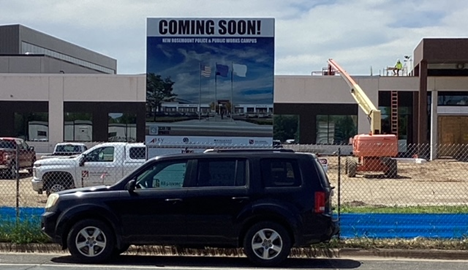
New police officers in Apple Valley (3) and Rosemount (3) through the ICPOET (Intensive Comprehensive Peace Officer Education and Training Program) using surplus monies. Eagan has two officers in training through the Pathways to Policing program, which was funded by surplus monies. SPRINT EMS program launched in January 2026. Response times have significantly improved in Greater Minnesota! Roundabout completed on Highway 3 in front of Rosemount High School, improving safety for students and staff. Approved “Knoxboxes” giving emergency access to school buildings. Improved students’ safety by requiring vehicles stop when school buses’ lights are flashing red. Secured $2.2 million to improve the existing Highway52/County Road 42 interchange in Rosemount. Saved Rosemount taxpayers’ dollars by partnering with local industry to secure land for Rosemount’s new Police and Public Works Campus which opened in Spring 2025. Secured $25 million to renovate the Rosemount Readiness Center where our National Guard members and law enforcement train. My legislation created the state agency Office of Emergency Medical Services to ensure financial oversight while centralizing and standardizing EMS licensing, training and inspections of ambulance services. The agency became operational in January 2025.
Secured millions in funding for the Minnesota Attorney General’s office to hire attorneys and staff to take on complex criminal prosecutions at the request of County Attorneys, whose staffs and resources are already stretched.
2023-2024: Increased Local Government Aid and $300 million in Public Safety Aid across Minnesota using surplus monies Rosemount: $1,143,588 Apple Valley: $2,464,493 Eagan: $3,023,244
2025 Judiciary and Public Safety Bill Increased funding for Department of Corrections Victim Services Funding The Philando Castile Memorial Training Fund for training in crisis intervention, mental health crises, conflict management Funding to improve ARMER, the statewide first responder radio network Keeping family contact information private in K-12 schools
2023 Judiciary and Public Safety Bill My Bill to invest in body armor for police, fire and EMS personnel My Bills to recruit, train, and serve police, fire and EMS professionals My Bill to mentor high school students for careers in law enforcement/EMS Increased gun safety with Universal Background Checks and Extreme Risk Protection Orders (Red Flag) Created new Community Crime and Violence Prevention Account with $70 million in grants across the state. Creation of Criminal offenses in MN statute for carjacking and organized retail theft. Support for crime victims, new Office for Missing and Murdered Black Women and Girls, shorter processing time for sexual assault kits, funding for domestic violence and sexual assault housing, grants for victim services programs. Support for law enforcement with Violent Crime Reduction Support Initiatives within the BCA; law enforcement education, training, and recruitment grants; mental health crisis response teams; and use-of-force training. 49.5 million/year to BCA’s Violent Crime Reduction Strategy to reduce backlogs and improve clearance rates. $5 million for organizations assisting and advocating for victims of sexual assault, crime, domestic violence, and child abuse. Restricting no-knock search warrants, investing in law enforcement education, and training, and mandating body camera release in deadly force incidents. $200 million to the MN Board of Public Defense and $62.6 million to Civil Legal Services The Clean Slate Act and Minnesota Rehabilitation and Reinvestment Act Investment in Minnesota’ probation delivery systems.
$22.5 Million for new State Police Headquarters. Enhanced Ignition Interlocking Requirements for repeat DUI offenders. Elevated “straw” gun purchases to a felony. Strengthened criminal consequences for identity theft. Specifically criminalized carjacking and retail theft. Mental Health Funding and a new 988 suicide crisis line. Adopted safer speed limit recommendations statewide.

Environment & Resources
Now, more than ever, the Minnesota legislature must step up to protect our natural resources and waterways. It will be up to the legislature to ensure that every citizen has clean water, clean air, and safe food. We need to encourage reasonable, sustainable sources of renewable energy, particularly as fossil fuel prices soar, and embrace efforts to conserve water quality, reduce usage, and protect natural sources of water. To keep energy available and affordable, we need to continue to cut down on carbon emissions and look towards cleaner renewable sources. We must also find safer ways to transport the oil and gas we do use. As a member of the Community Advisory Council to Flint Hills Resources Pine Bend Refinery, I represented our shared interests in protecting the environment and increasing safety. My experience working with energy producers to promote cleaner production has informed many of my votes at the Capitol. Minnesota has attracted many data center projects and I am paying attention to the potential impact on the environment and resources. In 2025, I voted for the new basic framework that regulates large data centers, imposes fees to fund energy assistance programs, and requires utilities to plan for the increased demand on resources these centers will cause without burdening the local population. While we were unable to repeal all the tax benefits these wealthy corporations will receive, we did repeal the sales tax exemption on their electricity usage, making them pay more toward their fair share. Every proposed data center should be individually evaluated, and I encourage the public to raise questions with city and municipal leaders. I support legislation to bar the use of non-disclosure agreements (NDAs) for these projects. Rosemount will soon be home to a Meta data center. This is not without controversy. What sets this center apart are its location and energy/water usage plans. It will be built on part of the former U-More Park which was unsuitable for most development. Meta is responsible for cleaning the pollution from the site. The center intends to take full advantage of our cold season, utilize renewable energy, and employ new technology to minimize water needs. The facility will be built by union workers, bring in good paying jobs, and become an important part of the local property tax base. Preserving Minnesota’s environment and natural resources should be a nonpartisan issue, and I will always vote to protect our beautiful state, and more importantly, the health and safety of Minnesotans. Highlights: 2025 Legacy Bill (passed with strong bipartisan support: Outdoor Heritage Fund - $163 million Clean Water Fund - $304 million Parks and Trails Fund - $130 million Arts and Cultural Heritage Fund - $180 million
Regulated data center development: Must meet energy, environmental and labor standards Pay a fee to fund energy assistance programs Utilities must plan for increased load and devise a new way to charge centers for their energy usage Repealed the sales tax exemption on centers’ electricity usage
Reauthorization of the Environment and Natural Resources Trust Fund (2023). Passed with strong bipartisan support. Created a State Competitiveness Fund to provide local matching funds to unlock federal energy grants (2023). Passed with strong bipartisan support. The Climate and Energy Budget Bill invests in electrification and expanded energy efficiency and energy conservation (2023). Passed with strong bipartisan support. $50 million for solar programs Programs to unlock federal and private energy funding $30 million to make electric vehicles and school busses more affordable $30 million to upgrade Minnesota’s electrical grid 100% clean energy standard by 2040
Investments to root out forever chemicals in drinking water and lead pipe replacement Green rebates on e-bike and home electrification purchases
$9 million for Minnesota’s parks and trails.
Veterans
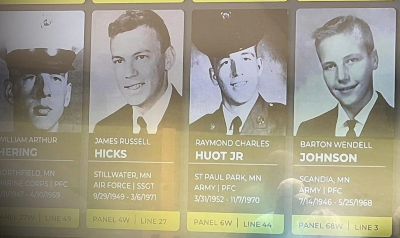
My family proudly served in our nation’s military. My father served in World War II and suffered from Post-Traumatic Stress Disorder (PTSD) for the rest of his life. My mother served in both World War II and Korea. Sadly, we became a Gold Star family when my brother Ray lost his life while serving in Vietnam.
I have seen first-hand how important comprehensive, compassionate, and convenient veteran services are to support our service members and their families. Our veterans deserve our care, and ensuring their well-being and support is not a partisan issue. We must all work together to address the needs of our veterans. As your Representative, I have championed legislation that helps our veterans, active-duty military, service members, and their families receive the support and recognition they deserve for their service to our country.
With unanimous support in the House, the 2025 Veterans and Military Affairs Bill provides $252 million over two years to:
Prevent veteran suicides Combat veteran homelessness Connect veterans with needed services Improve veterans’ social connections Fund meal on wheels for veterans in need Increase staffing for Veterans’ Homes Unlock an additional $26 million in federal funding Importantly, this legislation gives state recognition to of the Hmong Veterans of the Secret War in Laos. These elders in our community sacrificed risked everything on behalf of the U.S. in Laos.
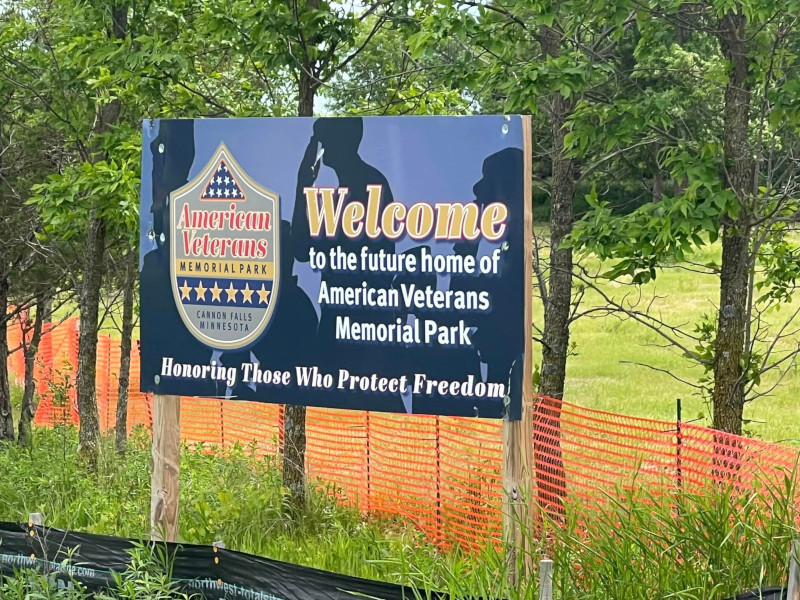
I am proud to report that the 2023-2024 Minnesota Legislature unanimously passed a Veterans and Military Affairs omnibus spending and policy bill that increased base funding by more than $150 million to provide: basic services job training physical and psychological treatment veterans’ bonuses veterans’ homes enlistment incentives training facilities construction of the Minnesota Military Museum